A THREAD network in the urban fabric
2018 – ongoing
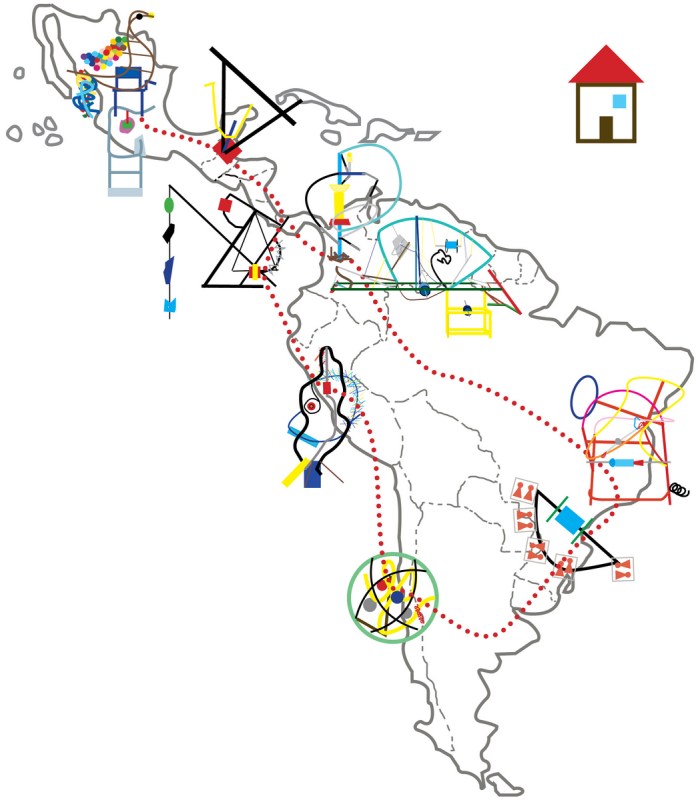
Map of the route completed between May 2018 and May 2019, with a representation of a sculpture-bobbin for each of the nine interventions in Central and South-American urban fabrics.
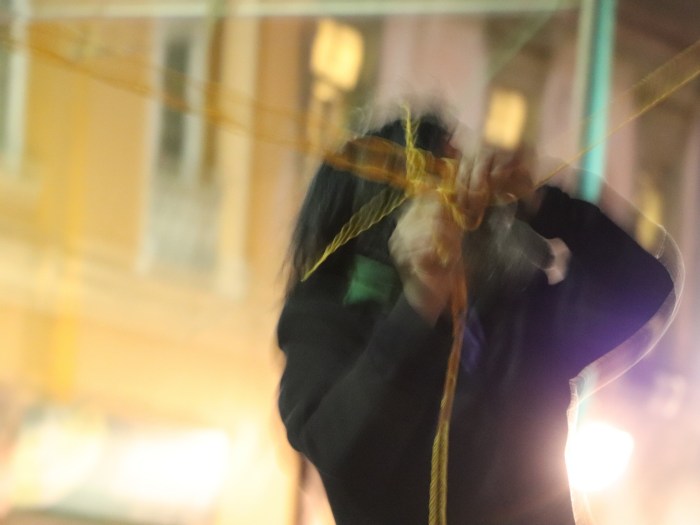
The sculpture-bobbins of our international project “A thread network in the urban fabric” incorporate bobbins of thread that the inhabitants and passers-by are invited to unwind to hang the threads wherever they wish in the urban space. They create a network of links playing with the constraints and the history of the place which, transformed into a scene for free expression, appears to them in a different way.
Dipping their pen in our multicolored inkwell, they write a new page of their common history and of our research.
“The thread network may be dismantled, but the bonds it created still exist” Franck, participant in the pilot project in Paris
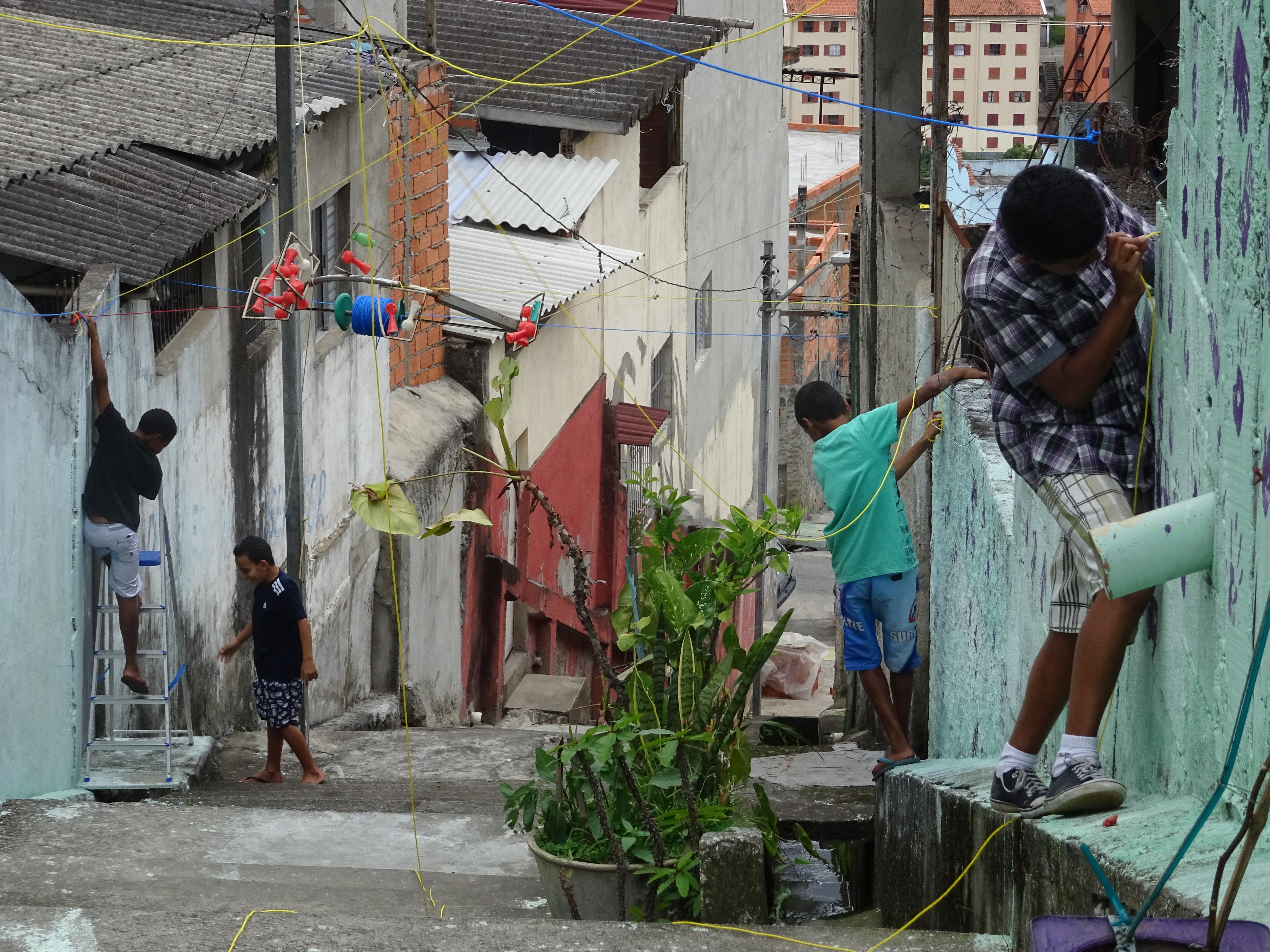
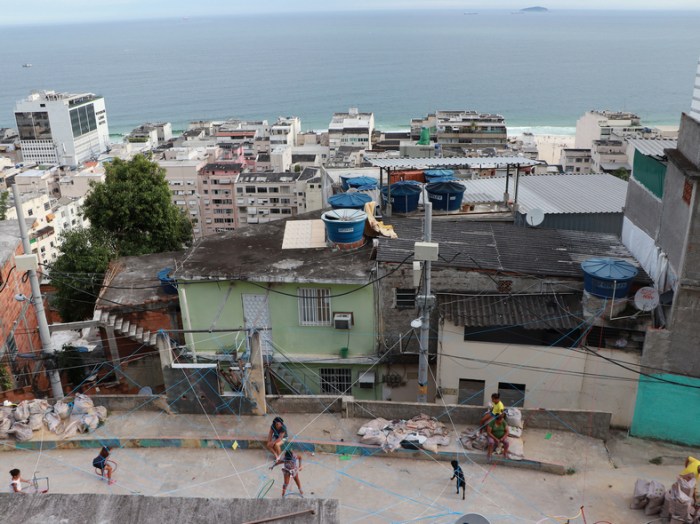
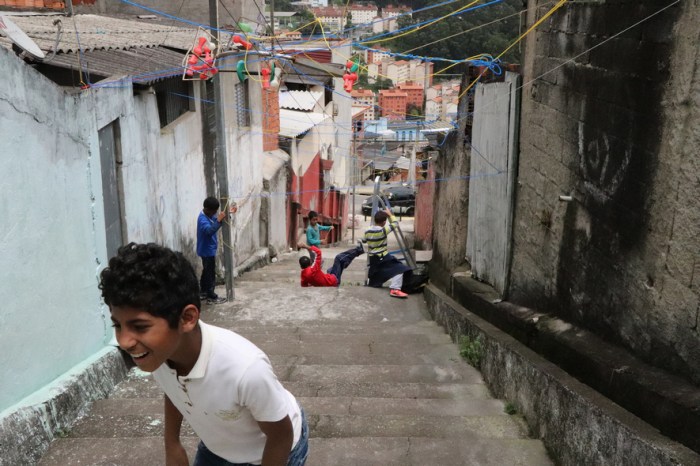
Photo: in the ex-favela Brasilândia, the appropriation of the set-up is vibrant and collective, the passers-by are all neighbors. The threads pass through all the elements of the staircases (holes in the walls, rods, cables…) as well as above the walls in the terraces, from public space to private spaces.
Out of the nine interventions in the public space, this is the only one where there was no dismantling party during which threads and sculptures are collectively recovered and reused. In the ex-favela Brasilândia the community decides to keep the cherished thread network.
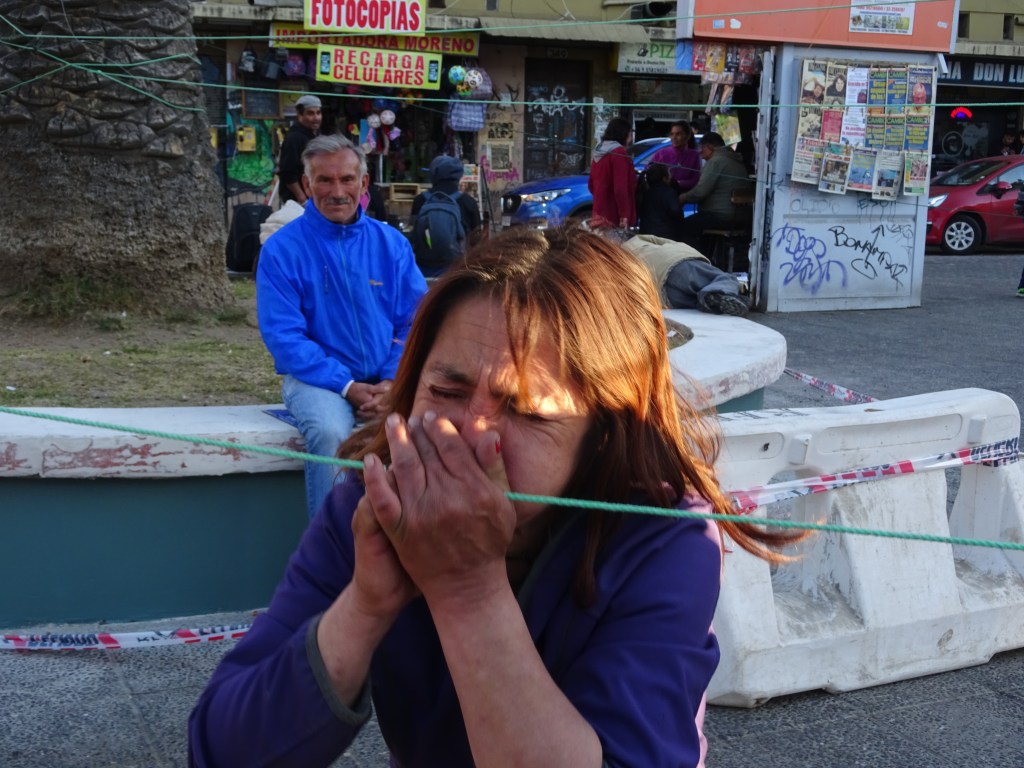
Photo : Magical trick by Chiquitita during the Thread network of the Plaza Echaurren, Valparaíso, 2018
The three stages (4-8 weeks) of the project «Thread network » :
1. Preparation : Choice and analysis of the site, fabrication of the sculpture-bobbins
2. Experimentation : Set-up, creation and appropriation of the Thread network by the local actors.
3. Restitution : Dismantling party, interviews, sharing and analysis of the results
The 9 intervention sites together with our Residency partners :
Neglected city centers : City of Guatemala with the Rafael Landivar University and the Municipality ; San Jose (Costa Rica) with the University TEC ; Valparaiso (Chile) with the School of Architecture and Design (PUCV), the Valpo Urban Lab and the Association of merchants ; Pereira (Colombia) with the Catholic University
Wealthy city center : Bogota with the National Autonomous University of Colombia
Popular outskirts: Comas (Lima) with the Association Sol de Medianoche ; ex-favela Brasilândia (Sao Paulo) with the Architecture School Escola Da Cidade & the Association Arte na Rua ; favela Babilônia (Rio de Janeiro) with the Association of inhabitants & the Pontifical University, Iztapalapa (Ville de Mexico) with the National Autonomous University of Mexico, the urbanism agency Barriopolis, the Association of neighbors & the Municipality.
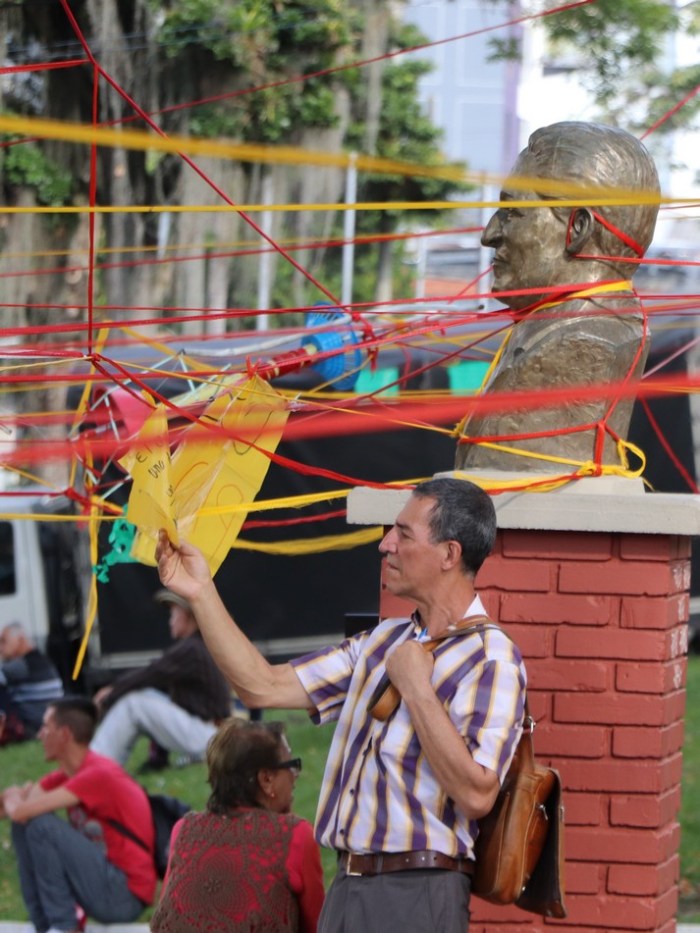
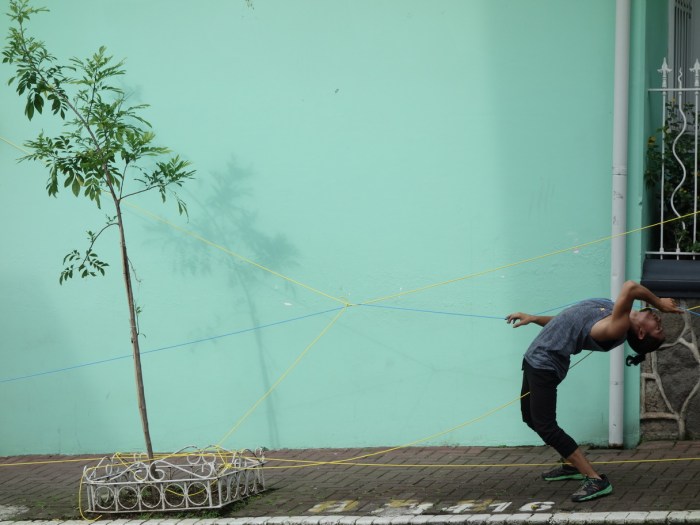
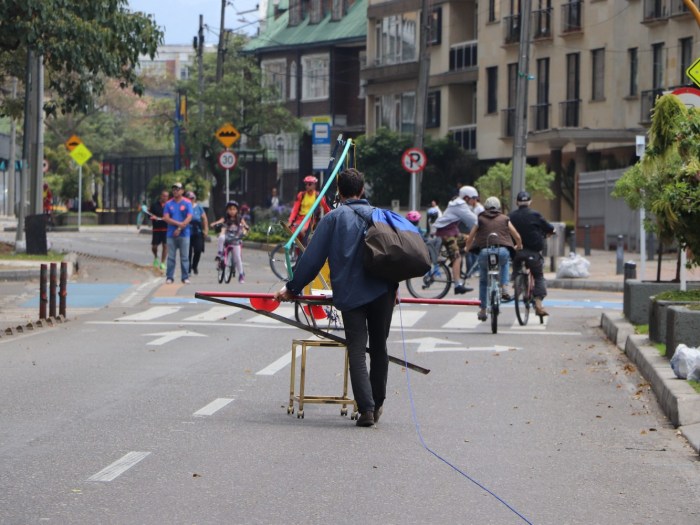
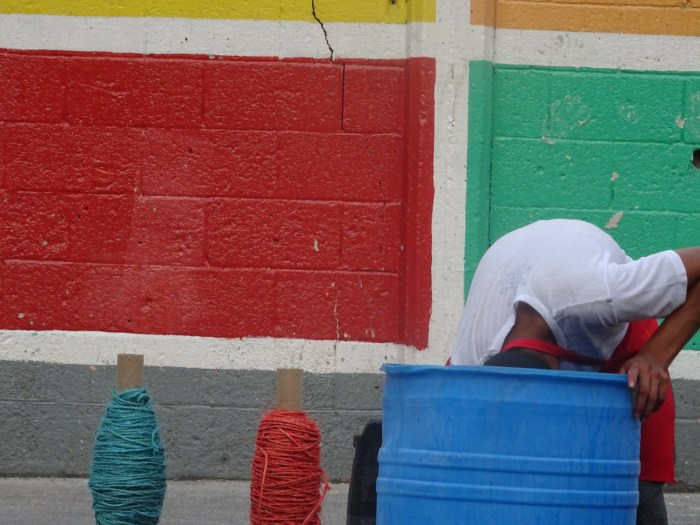
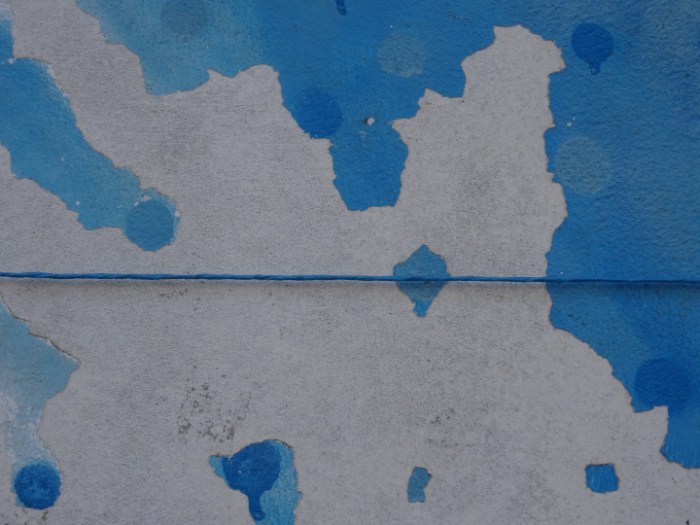
The materials have an endless history and their use can be constantly modified. Rejected then recovered, assembled, and reinvested with a new purpose, they bear witness of the history of certain places and of the relationships that have been tied to them.
 collectifmasi.com